One of the superfoods I take every single day is spirulina! Why? Because it’s super nutrient-dense and offers a variety of vibrant wellness benefits for a healthier you! Discover the top 15 powerful health benefits of spirulina with scientific facts to show you how awesome this superfood is.
Spirulina: The Ancient Superfood Backed by Science
Did you know one of the most powerful superfoods on Earth has been eaten since the time of the Aztecs? Meet spirulina: a vibrant blue-green algae packed with protein, antioxidants, and minerals that fuel your body and glow up your health.
From ancient lakes to NASA’s space missions, spirulina has traveled through history as a true food of the future.
What is Spirulina?
Spirulina is a nutrient-dense cyanobacterium (often called blue-green algae) that grows naturally in warm, alkaline lakes and is also cultivated in controlled aquatic farms.
It is packed with protein (up to 60–70% by dry weight), essential amino acids, B vitamins, minerals like iron and magnesium & unique pigments such as phycocyanin, which give it its striking blue-green color.
Unlike many supplements, spirulina is considered a ‘whole food,’ meaning you can consume the entire organism in powdered or dried form without major processing.
Its remarkable nutrient profile has earned it the reputation of being one of the most sustainable and complete superfoods on Earth.
A Brief History of Spirulina
Spirulina isn’t a modern health fad, it’s an ancient food source.
Historical records show that Aztecs in 16th-century Mexico harvested spirulina, known as tecuitlatl from Lake Texcoco, drying it into cakes as a major source of protein. Spanish chroniclers documented its use in feeding entire populations.
Kanembu people of Chad have consumed spirulina harvested from Lake Chad for centuries, sun-drying it into greenish cakes called dihé.
NASA and space exploration later recognized spirulina’s extraordinary nutrient density, studying it as a potential food for astronauts on long missions.
This deep-rooted history shows spirulina has been treasured across cultures as a survival food, long before it became a smoothie booster.
How Spirulina is Harvested Today
Today, spirulina is farmed worldwide in controlled freshwater ponds or raceway systems to ensure purity and safety. The cultivation process generally follows these steps:
- Cultivation – Spirulina thrives in alkaline, mineral-rich water under abundant sunlight.
- Harvesting – The algae are filtered out from the water through fine mesh screens.
- Washing & Drying – The biomass is washed multiple times, then spray-dried or freeze-dried to preserve nutrients.
- Packaging – Dried spirulina is ground into powder, compressed into tablets, or encapsulated.
Modern cultivation focuses on safety by avoiding contamination from microcystins (toxic algae), heavy metals, or pollutants which ensures spirulina remains a clean, sustainable food.
Spirulina’s Nutritional Profile
One of the reasons spirulina has gained superfood status is its incredible nutrient density.
Gram for gram, it packs more nutrition than many commonly eaten foods, earning it a place on NASA’s shortlist for space travel.
Here’s what makes spirulina so impressive:
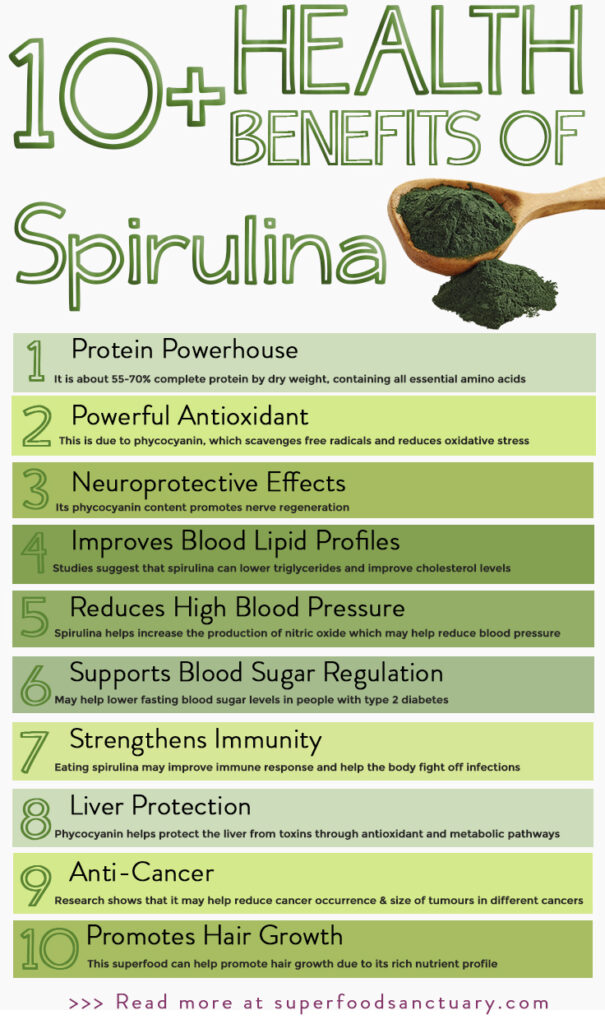
- Protein powerhouse: Spirulina is about 55-70% complete protein by dry weight, containing all essential amino acids. This makes it especially valuable for vegetarians and vegans.
- Rich in vitamins: It provides B vitamins (including B1, B2, B3), vitamin K, and small amounts of vitamin E and beta-carotene (pro-vitamin A).
- Mineral content: Spirulina is an excellent source of iron, magnesium, potassium, and calcium, all vital for blood health, energy production, and bone strength.
- Antioxidants: Its deep green-blue hue comes from phycocyanin, a potent antioxidant and anti-inflammatory compound unique to spirulina. It also contains carotenoids like zeaxanthin and lutein, which support eye health.
- Essential fatty acids: Spirulina offers gamma-linolenic acid (GLA), an omega-6 fatty acid linked to heart and brain health.
- Chlorophyll: Known as a natural detoxifier, chlorophyll supports oxygen transport and liver function.
To put this into perspective, a single tablespoon (7 g) of dried spirulina powder typically provides:
- ~4 g of protein
- ~1.1 g of fat (with beneficial fatty acids)
- ~2 g of carbohydrates (mostly from complex polysaccharides)
- ~11% of the RDI of iron
- ~21% of the RDI of copper
- A rich dose of antioxidants and trace minerals
Top 15 Health Benefits of Spirulina
Spirulina is acclaimed for its dense nutritional profile and powerful bioactive compounds. Below are over ten health benefits of spirulina, validated by peer-reviewed studies and clinical trials:
1. Improves Blood Lipid Profiles
Studies suggest that spirulina can lower triglycerides and improve cholesterol levels.
A 2023 dose-response meta-analysis of 20 RCTs (1,076 people) found spirulina significantly reduced LDL-C, total cholesterol, and triglycerides, and increased HDL-C levels (source).
2. Lowers Blood Pressure
Spirulina supplementation may help reduce both systolic and diastolic blood pressure, particularly in individuals with high blood pressure.
A meta-analysis including five RCTs (230 subjects) reported that spirulina reduced systolic blood pressure (SBP) by ~4.6 mmHg and diastolic blood pressure (DBP) by ~7.0 mmHg, especially in hypertensive individuals (source).
Another RCT using spirulina-fortified dressing over 8 weeks significantly lowered both SBP and DBP compared to placebo (source).
3. Supports Cardiovascular Health & Metabolic Syndrome Factors
Research shows that spirulina may help lower LDL (“bad”) cholesterol and triglycerides while increasing HDL (“good”) cholesterol, potentially reducing the risk of heart disease.
A comprehensive meta-analysis (12 clinical studies) demonstrated that spirulina reduced total cholesterol, LDL, triglycerides, fasting glucose, and DBP; especially at doses of 2–8 g/day over ≥12 weeks (source).
4. Reduces Hypertension & Supports Weight & Endothelial Function
Adding spirulina to your diet can help increase the production of nitric oxide which may help reduce blood pressure.
A double-blind RCT (3 months, 2 g per day) showed spirulina significantly reduced weight, BMI, systolic BP, and improved endothelial stiffness in overweight hypertensive patients (source).
5. Acts as an Antioxidant and Anti-inflammatory Agent
Spirulina offers powerful antioxidant and anti-inflammatory properties.
This is largely attributed to phycocyanin, the blue pigment in spirulina, which scavenges free radicals and reduces oxidative stress.
6. Neuroprotective Effects
Phycocyanin demonstrates neuroprotective qualities, such as reducing reactive oxygen species in brain astrocytes and promoting nerve regeneration.
7. Liver Protection (Hepatoprotective)
Phycocyanin has been shown in experimental models to protect the liver from toxins through antioxidant and metabolic pathways.
8. Aids in Weight Management & Metabolic Health
Reviews indicate spirulina contributes to improvements in BMI, insulin resistance, and metabolic syndrome factors (source).
9. May Support Blood Sugar Regulation
According to research, spirulina may help lower fasting blood sugar levels and improve other metabolic markers in people with type 2 diabetes.
Meta-analyses suggest favorable effects of spirulina on lowering fasting blood glucose and improving insulin sensitivity (source).
10. Modulates Immune and Inflammatory Responses
This blue-green algae also contains various compounds that may improve immune response and help the body fight off infections.
Spirulina contains bioactive peptides and compounds (like phycocyanin and gamma-linolenic acid) that may reduce pro-inflammatory markers and support immunity (source).
11. Good Source of Protein
Spirulina is a good source of protein, which can aid in muscle recovery and growth. This makes it potentially beneficial for athletes and those looking to improve their physical performance (source).
12. Protect Against Allergies
Spirulina supplements may be effective against allergic rhinitis.
A 2010 study concludes that spirulina is more effective than cetirizine, an over-the counter antihistamine used to treat allergies, in improving cardinal symptoms of allergic rhinitis (AR) patients. Furthermore, it suggests that spirulina can be considered as an alternative treatment in patients with AR (source).
13. May Have Anti-Cancer Benefits
Touted as a potent superfood, spirulina may also have anticancer benefits.
Research shows that it may help reduce cancer occurrence and the size of tumours in different cancers (source).
14. May Help Improve Anemia
Research suggests that spirulina may help improve anemia in pregnant people in their second trimester (source) and reduce iron deficiency in young children (source).
15. Promote Hair Growth & Beautify Skin
Last but not least, one of the health benefits of spirulina is its beautifying properties!
Spirulina is a wonder nutrient for luscious hair and glowing skin! According to this research, it not only contains every skin nutrient but it cleanses and purifies the body daily (source).
This superfood can help promote hair growth due to its rich nutrient profile, including protein, fatty acids, and iron.
It can increase hair length and thickness by strengthening hair follicles, reducing hair loss, and improving scalp health.
Spirulina also contains essential amino acids, which are the building blocks of keratin, the protein that makes up hair.
You can also make a spirulina hair mask to apply topically for longer thicker hair!
How to Take Spirulina Safely
Here’s how to take spirulina safely, including the recommended dosage, safe forms of it available on the market and some usage tips!
Typical Dosage:
Most studies use 1-8 g per day, with benefits seen at around 2-6 g daily.
Forms Available:
Powder, capsules, tablets, and food-fortified forms (e.g., spirulina salad dressing).
Usage Tips:
- Stir powder into smoothies, juices, or dressings.
- Start with lower doses (1 g) and increase gradually.
Safety Precautions:
- Choose reputable, tested brands to avoid microcystin and heavy metal contamination.
- Not suitable for individuals with phenylketonuria or specific immune conditions.
- Not intended for infants.
What Blue Spirulina Actually Is
What is the true nature of the breath-taking blue spirulina? ‘Blue spirulina’ refers mainly to phycocyanin which is the extracted blue pigment from spirulina, not the whole algae.
The benefits of phycocyanin include offering antioxidant, anti-inflammatory, and neuroprotective properties.
However, blue spirulina provides limited nutritional content compared to whole spirulina. Many products actually blend phycocyanin with whole spirulina powder for balance, which is totally fine.
Blue Spirulina + Pineapple Detox Drink Recipe

Bright, tropical, and oh-so-magical, this drink blends juicy pineapple with the ocean-hued beauty of blue spirulina for a refreshing boost of energy and antioxidants! Make this blue spirulina detox drink to cleanse your gut, aid in weight loss and make your body feel lighter with more energy!
Benefits of Ingredients:
- Pineapple – A great fat-burner and gut cleanser that helps scrub & cleanse out the intestinal tract.
- Aloe vera – Good at absorbing & neutralising toxins. It ha a mucilaginous texture that coats the walls of the gut and helps promote smooth bowel movements.
- Blue spirulina – It is full of vital nutrients & is a powerful detoxifying algae-based protein that sticks to toxins and heavy metals thereby helping eliminate them from the body.
- Coconut water – It contains electrolytes and antioxidants that may help regulate kidney and liver functions in the body. Drinking it helps flush out excess wastes from the intestines.
Ingredients:
- ½ tsp blue spirulina powder (where to get it)
- 1 aloe vera leaf or aloe vera juice (where to get it)
- ½ cup fresh pineapple
- ½ cup chilled coconut water (where to get it)
- Juice of ½ lime or lemon
- Ice cubes (optional)
- Fresh mint or pineapple slice for garnish
- High speed blender (where to get it)
Directions:
- Wash, peel and chop up a pineapple.
- Soak a fresh Aloe Vera leaf in water for 30 minutes to get rid of the yellow sap. Next, remove the green skin to extract only the succulent gel. Cut it into pieces.
- Toss the pineapple chunks and Aloe Vera gel in a blender.
- Dump in blue spirulina, coconut water and the juice of half a lime or lemon.
- Blend for a few seconds and watch that magical blue swirl!
- Pour into a glass cup.
- Add ice if desired.
- Garnish and serve immediately for a cooling, nutrient-rich pick-me-up.
Take Care
Spirulina is not just a green powder fad. It is a powerful, nutrient-dense superfood with a robust body of clinical evidence supporting its benefits for lipids, blood pressure, metabolism, antioxidants, and more.
Whether you take it in powder form, as tablets, or enjoy the dazzling beauty of blue spirulina in smoothies and drinks, a little goes a long way. Remember the saying – consistency is key! Start with small amounts and let your body soak up its powerful goodness.
Next time you sip on a spirulina smoothie or stir it into your favorite recipe, remember: you’re nourishing yourself with something that has fueled civilizations, sustained cultures, and even earned a place in space travel. Truly a superfood for both past and future!
Thank you for reaching the end of this article, “All About Spirulina: Top 15 Powerful Health Benefits of Spirulina, Backed by Science.” Share any thoughts in the comments below!


Leave a Reply