I routinely make elderberry syrup for my family because of how powerful it is against coughs, colds and respiratory infections. Learn how to make homemade elderberry syrup in this article!
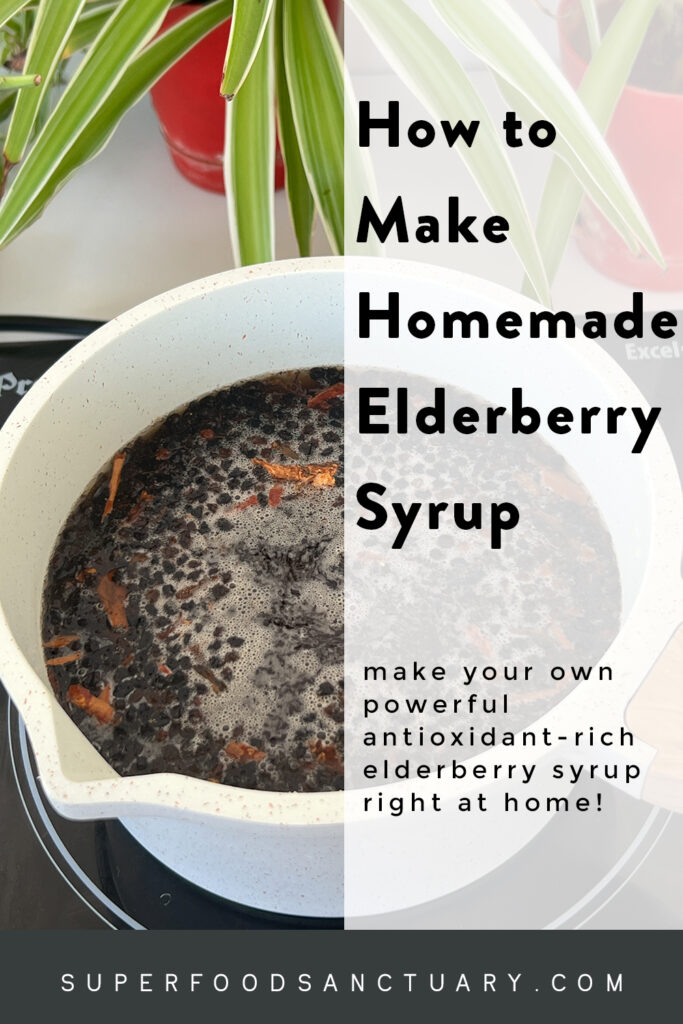
There’s something magical about creating your own remedies in the kitchen like stirring a pot of herbs, spices, and berries, then bottling the result as if you’ve captured a little piece of nature’s wisdom.
Elderberry syrup is one such potion, a timeless recipe passed down through generations.
This rich, dark syrup isn’t just delicious; it’s also a powerhouse for the immune system, especially during the colder months when our bodies need a little extra support.
The Elder Tree: A Glimpse into History
The elder tree (Sambucus nigra) has long been woven into folklore and traditional medicine. In ancient Europe, it was considered sacred, often called the ‘medicine chest of the people’ because every part of the plant had a use. Elderflowers were brewed into teas for fevers, while the berries were simmered into tonics for colds, chest congestion, and seasonal infections.
In Norse mythology, the elder tree was associated with protection and renewal, while Native American tribes also valued elderberries for their ability to soothe ailments and boost vitality. Even Hippocrates, the ‘Father of Medicine,’ praised elderberries as his ‘medicine chest.’ This legacy continues today, with modern science confirming much of what folk healers already knew.
Why Elderberries Are Special
Elderberries are tiny, dark purple fruits, but they’re nutritionally mighty. Here are some of the wonderful properties & benefits of elderberries.
- Rich in Antioxidants: Elderberries contain anthocyanins, the pigments responsible for their deep color. These compounds have been linked to reduced oxidative stress and better cellular protection.
- Vitamin C Boost: Just a small serving provides a significant portion of your daily vitamin C intake, helping strengthen the immune system.
- Natural Antivirals: Studies suggest elderberry extract can interfere with the flu virus’s ability to replicate, shortening recovery time.
- Anti-Inflammatory Support: They contain flavonoids that help reduce inflammation, which can ease symptoms of sore throats, swollen sinuses, and general body aches.
- Digestive and Heart Health: Thanks to their fiber and phytonutrients, elderberries may support digestion and healthy circulation.
Top 5 Health Benefits of Elderberry Syrup
- Immune System Support – A daily spoonful can help prime your body’s defences during seasonal changes.
- Cold & Flu Relief – Some clinical studies have shown elderberry reduces the duration of flu symptoms by up to 4 days.
- Respiratory Health – It may help ease congestion, coughing, and sinus pressure.
- Skin Health – Antioxidants in elderberries protect the skin from free radical damage, promoting a youthful glow.
- Mood & Energy Balance – Folk tradition links elderberries with vitality, helping to combat fatigue in the winter months.
What You Need to Make Homemade Elderberry Syrup
Before we head onto the recipe, let’s see the different uses of each ingredient:
Elderberries
- Rich in antioxidants (especially anthocyanins) that help fight oxidative stress.
- Traditionally used to shorten the duration of colds and flu.
- Supports immune system function.
- Contains vitamin C, dietary fiber, and anti-inflammatory compounds.
Cinnamon
- Contains antioxidants and anti-inflammatory properties.
- Supports healthy blood sugar levels.
- Naturally warming spice that enhances circulation.
- Has antimicrobial benefits.
Ginger
- Known for its anti-inflammatory and antioxidant effects.
- Supports digestion and relieves nausea.
- May help ease congestion and sore throats.
- Warming spice that enhances circulation.
Lemon
- High in vitamin C, which supports immunity.
- Natural detoxifier that aids digestion.
- Antimicrobial and alkalizing effect on the body.
- Refreshes and balances the syrup’s flavor.
Cloves
- Strong antibacterial and antiviral properties.
- Rich in antioxidants.
- Helps relieve respiratory issues and supports oral health.
- Adds depth and warmth to the syrup.
Raw Honey
- Natural antimicrobial and antibacterial properties.
- Soothes sore throats and coughs.
- Provides a natural source of energy.
- Contains enzymes, antioxidants, and trace nutrients.
How to Make Homemade Elderberry Syrup | Easy Recipe
Okay, now here’s how to make homemade elderberry syrup – quick, easy and delicious!
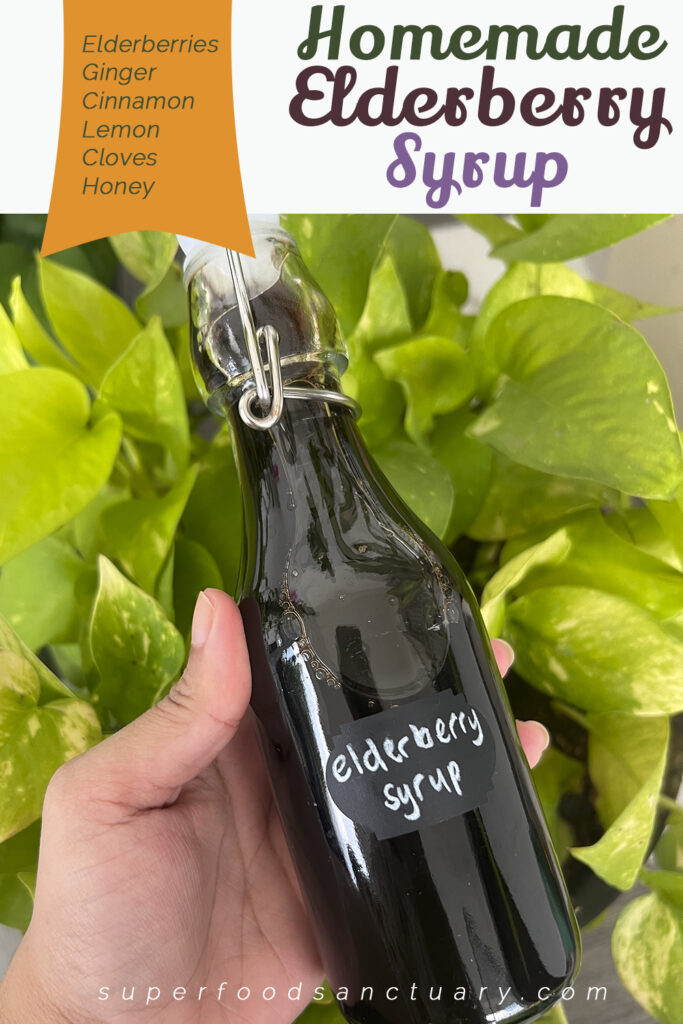
Ingredients
- 1 cup dried elderberries (where to get them) or 2 cups fresh if in season
- 4 cups filtered water
- 1 cinnamon stick (where to get it)
- 1 tbsp fresh ginger root, sliced or grated
- Juice from 1 lemon
- 3–4 cloves (where to get it) *optional, for warming spice
- 1 cup raw honey (where to get it) or maple syrup/agave for vegan alternative (where to get it)
- Glass storage bottles (where to get them)
Directions
- In a medium saucepan, add elderberries, water, cinnamon, ginger, and cloves.
- Bring to a boil, then reduce the heat to low and simmer for 45–60 minutes, until the liquid reduces by almost half.
- Remove from heat and allow it to cool slightly.
- Strain the liquid through a fine mesh sieve or cheesecloth, pressing the berries gently to extract all the juice.
- Once the liquid is warm (not hot), stir in lemon juice and honey. This preserves the honey’s natural enzymes and benefits.
- Pour into a sterilized glass jar or bottle. Store in the refrigerator for up to 2 months.
How to Use Homemade Elderberry Syrup
- Daily Support: Take 1 teaspoon a day as a natural immune booster.
- During Illness: Adults can take 1 teaspoon every 2–3 hours at the onset of cold or flu.
- For Children (over 1 year): ½ teaspoon daily. (Do not give honey-based syrups to babies under 12 months.)
Creative Uses:
- Stir into tea for a soothing drink.
- Drizzle over yogurt, pancakes, or oatmeal.
- Add a splash to sparkling water for a refreshing mocktail.
Tips & Precautions
- Never eat raw elderberries as they contain naturally occurring compounds that can upset the stomach. Cooking removes these.
- Pregnant or nursing women should consult a doctor before use.
- Store syrup in the fridge and always use a clean spoon to avoid contamination.
- Elderberry syrup is a supportive remedy but not a substitute for medical treatment when needed.
Homemade elderberry syrup is more than just a seasonal wellness tonic because it’s a connection to generations of herbal wisdom!
By simmering these berries with warming spices and honey, you create a nourishing elixir that not only supports your health but also adds comfort and ritual to your routine.
Keep a jar in your fridge and let this simple, natural remedy remind you of the healing power found in nature’s smallest fruits!
Are you planning on making homemade elderberry syrup? Let me know your thoughts and any questions you have below!


Leave a Reply